Donald Preston
The RoomDonald Preston, publisher of the Press, appears as the public figure the Unnamed protagonist hopes will transform a smuggled letter about police harassment into protection, release, and a campaign for political change. Preston’s projected role is at once practical and symbolic: he brings a newspaper, an attorney, and a plan for publicity, while the Unnamed protagonist’s imagination makes him the guarantor that the authorities will no longer be able to silence their prisoner.
Identity and Introduction
Preston is introduced in the visiting room alongside Stacey Lowry, whom the captain identifies as an attorney. The captain makes an exception to regular visiting hours, and Preston and Lowry take their places across the partition from the Unnamed protagonist. The scene emphasizes Preston’s professional standing and access: the captain knows who he is, and the visit is arranged promptly after the letter reaches the newspaper. No personal history or life outside this public role is supplied.
The letter has been carried out by a friend and delivered the previous night. After the editor calls him, Preston contacts Lowry and arranges to come first thing in the morning. The Unnamed protagonist is relieved that the letter was successfully smuggled out and that its recipient has responded so quickly. Preston’s appearance therefore answers a particular fear: the message might have been destroyed, or its carrier caught, before it could reach anyone able to act on it.
Response to the Unnamed Protagonist’s Detention
Preston and Lowry listen as the Unnamed protagonist describes having money taken and not returned, being denied even enough for cigarettes, and being unable to obtain a toothbrush. Lowry reacts with indignation; Preston joins him in offering an immediate practical remedy. They have already contacted a bail bondsman and expect the Unnamed protagonist to be released within an hour. Preston also says they will remain until the paperwork is complete, so that they do not leave the release to chance.
Their decision to stay carries a second implication. The captain has been curious about why Preston and Lowry wanted to visit, and the visitors suspect that their presence is attracting official attention. Their response is not to abandon the prisoner but to remain beside them through the process. In the Unnamed protagonist’s account, Preston’s newspaper connection thus matters both as a means of public exposure and as a form of immediate, visible support inside the prison.
The Campaign Preston Proposes
Preston makes clear that publishing the letter alone would not be enough. Without sustained follow-up, he argues, public outrage would fade as readers returned to the pressures of everyday life. He and Lowry therefore propose using the Unnamed protagonist’s experience as the starting point for a coordinated campaign, with the Unnamed protagonist in the foreground. Preston’s newspaper would publish a daily barrage, while Lowry would speak to professional and civic groups and to any other audiences willing to listen.
The proposed campaign is deliberately expansive. Preston plans to reopen the newspaper’s files for statements, letters, depositions, photographs, rumors, and any other material that might stir public interest and compel a legislative investigation. He says that the effort will use every available tool, even devious ones, and will continue until public pressure forces the legislature to act. The strategy does not rely on the politicians’ independent concern for justice: Preston acknowledges their attachment to power, but reasons that they are sensitive to constituents’ reactions because they want to remain in office.
He also extends the campaign beyond editorials and speeches. Television, mass-circulation magazines, interviews, personal appearances, and pamphlets are all considered possible means of keeping attention on the issue. This range gives Preston a defined function in the partnership: Lowry supplies public advocacy in person, while Preston uses the newspaper and its accumulated material to sustain attention and widen the audience. The Unnamed protagonist’s letter is presented as the catalyst that allows them to activate a campaign they say they have wanted to mount for years.
Imagined Release and Narrative Role
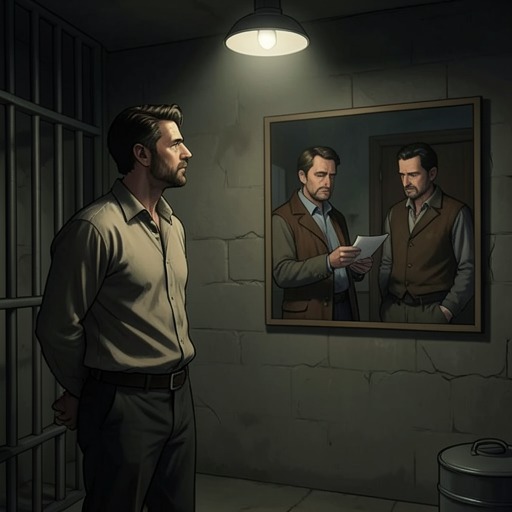
The distinction between Preston’s appearance and the events the Unnamed protagonist hopes it will produce is important. After the visiting-room sequence and the campaign planning, the narration describes the Unnamed protagonist reviewing the scenes and dialogue with satisfaction. That framing makes Preston’s promises part of an imagined future, not proof that the newspaper published the letter, that the campaign took place, or that bail was actually secured. The confidence Preston represents is therefore also a measure of the prisoner’s need to picture an audience powerful enough to answer the authorities.
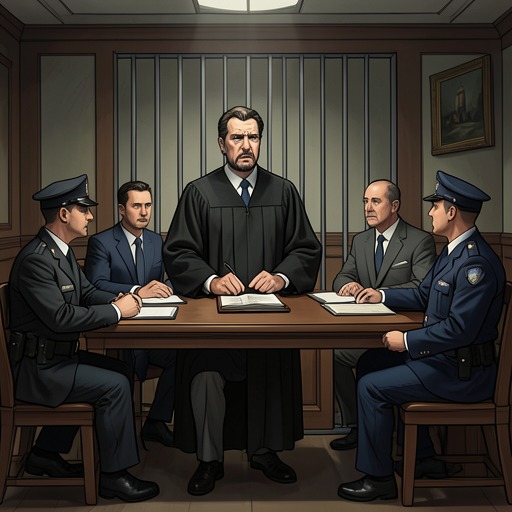
In a later imagined courtroom scene, Lowry questions an arresting officer, requests dismissal of the charges by citing State v Rubens, and wins the motion. Preston then meets the newly freed Unnamed protagonist in the corridor, shakes their hand, puts an arm around their shoulder, and asks how freedom feels. The three later sit in a quiet restaurant, toast their success and prospective campaign, and Preston congratulates the Unnamed protagonist on their courage. These details extend Preston’s projected role from publisher and organizer to witness of vindication, but the passage remains an imagined resolution rather than a confirmed ending to the case.
Significance
Preston’s proposed campaign joins a public argument about police abuse to the Unnamed protagonist’s intensely personal desire to make the officers regret their actions. His plan gives that anger an institutional vocabulary—evidence, publicity, constituents, and legislative inquiry—without erasing its retaliatory charge. The imagined alliance promises not only that the letter will be heard, but that the prisoner will become central to a struggle large enough to reverse their isolation. Preston’s significance lies in that double promise: he is a plausible organizer within the scene and, within the Unnamed protagonist’s fantasy, the powerful ally through whom private grievance becomes public consequence.